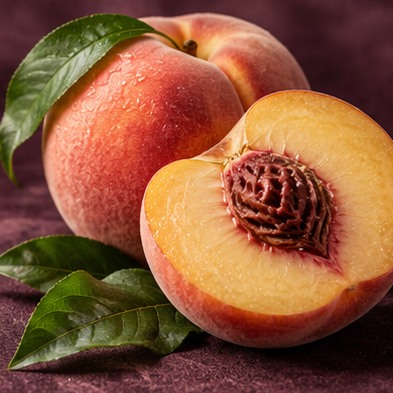
Peach is a useful lesson in how a fragrance can turn a familiar fruit into several different ideas. One interpretation may suggest juicy flesh, another the soft texture of the skin, and another a rich fruit note against woods or amber. The word peach therefore provides a starting reference rather than a complete prediction. Understanding the texture and background tells you more than simply classifying the perfume as fruity.
What does peach smell like in a fragrance?
Juicy, ripe, velvety and softly creamy are common descriptive directions. They point to different parts of the experience rather than to one universal material. A bright fruit impression can feel quite different from a deeper, warmer one, even if both are recognisably peach-like. Ask whether the fruit dominates the entire composition or mainly changes the opening and the texture of the floral heart.
The peach accord and the fruit itself
A peach note is not evidence that a perfume contains peach juice, pulp or a particular fruit extract. It can name an accord that recreates an impression. TOM FORD’s Bitter Peach product page explicitly lists a pêche-de-vigne accord alongside orange, davana, labdanum, patchouli and sandalwood materials or effects. The language illustrates why a note list can mix descriptive accords with named materials without disclosing the full formula.
Why woods and florals change the fruit
A woody setting can give fruit a drier outline, while floral effects may make it feel more expansive or polished. A warmer balsamic background can shift the association toward richness rather than freshness. These are useful directions for comparison, not a formula for a finished fragrance. Two perfumes sharing peach and wood descriptors may still differ because of proportions, material choices and effects not highlighted in their marketing language.
Peach in the 2026 note conversation
Spate’s 2026 predicted-trends report includes peach among growing fragrance-note interests, discussing fresher edible references within a broader gourmand context. That should not be read as a claim that peach perfumery is new. A familiar note can attract renewed interest through different interpretations, and the distinction between an established idea and a current market signal helps keep trend coverage informative.
A practical comparison with guava and osmanthus
Guava provides a tropical-fruit reference, while osmanthus can introduce dried-apricot and leathery facets within a fruity-floral material. Comparing those directions with peach helps identify whether your preference is for juicy brightness, velvety texture or a drier fruit-and-leather relationship. Use separate labelled blotters and allow each fragrance to develop. A careful description of the difference is more useful than declaring every fruit note either sophisticated or juvenile.
Common questions
Is peach perfume necessarily sweet?
No. It can be juicy, softly creamy, dry-textured or framed by woods and balsamic effects. The whole composition determines the impression.
Are peach and osmanthus the same note?
No. They can share stone-fruit associations, but osmanthus materials also have documented floral, tea-like and leathery facets.
Sources and further reading
Trend reports describe their own markets, measures and observation periods; they are not global sales rankings. Product examples describe the named brands’ published interpretations, without affiliation or endorsement.