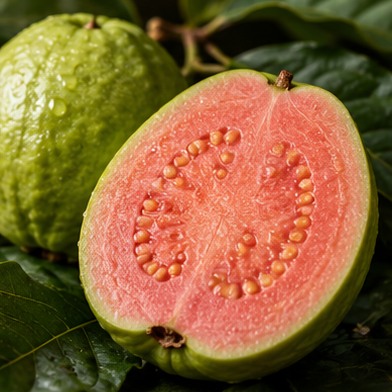
Guava introduces a vivid tropical-fruit idea into perfume, but the most useful question is how that fruit is framed. It can appear juicy and bright, softened into a creamy impression, or placed against a greener background. The experience may be playful without being simple. Understanding the surrounding texture helps explain why two fragrances with the same guava note can feel very different after their first impression.
A fruit impression with several possible directions
Descriptions such as ripe, tart, juicy and creamy refer to perceived qualities, not to a standard guava formula. A fragrance can lean toward the idea of fresh fruit, a chilled drink or a dessert. Before deciding whether you like the note, ask which version you are smelling. A preference for tart fruit does not automatically translate into a preference for a sweet, milky tropical composition.
What a guava note does—and does not—reveal
A guava note in a perfume description does not establish that the fragrance contains guava juice, pulp or an essential oil from the fruit. It tells you the intended olfactory reference. The effect can be composed from several fragrance materials. This distinction is particularly important for edible descriptions, where a familiar ingredient name can make a formula seem more literal than it is.
An official example of a creamy tropical setting
Ellis Brooklyn describes GUAVA GRANITA through guava and other tropical-fruit or floral effects, with vanilla and almond-milk impressions beneath them. The description demonstrates one way to give a fruit theme a rounded setting. It should not be treated as the universal smell of guava in perfume, or as a full ingredient disclosure. The example is useful precisely because it makes the surrounding composition visible in the brand’s own language.
Why guava is part of the current conversation
Spate’s 2026 predicted-trends report includes guava among growing fragrance-note interests, based on its stated US search and social observation period. That is a market-attention signal rather than a ranking of perfume quality or a global sales claim. For a reader, its practical value is a reason to explore a less familiar fruit direction alongside established citrus and stone-fruit references.
How to compare tropical freshness with sweetness
Test a guava interpretation beside a citrus perfume and return to both after the opening. Does the guava remain bright, or does a creamy foundation become more prominent? Is the citrus primarily peel-like while the guava feels more fleshy? Record these contrasts without assuming that fruity means weak, youthful or short-lived. Those judgements require the actual product and a real wearing experience, not the note category.
Common questions
Is guava perfume always sugary?
No. A guava impression can be tart, juicy, green or creamy. The overall formula determines whether it feels overtly sweet.
Does a tropical note mean a perfume is only for summer?
Seasonal associations can be useful, but they are preferences rather than rules. Evaluate the particular composition in the conditions where you plan to wear it.
Sources and further reading
Trend reports describe their own markets, measures and observation periods; they are not global sales rankings. Product examples describe the named brands’ published interpretations, without affiliation or endorsement.