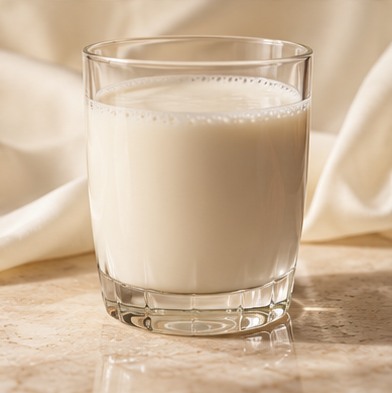
Milky perfume is less a single smell than a question of texture. A fragrance may suggest cool milk, warm cream, a soft drink-like accord or a rounded, skin-close impression. These associations often overlap with vanilla, grains or woods, but they should not be collapsed into one generic idea of sweetness. Understanding a lactonic direction starts with asking what feels smooth and how that smoothness shapes the rest of the perfume.
What does lactonic mean in perfumery?
Lactonic is commonly used to describe milky or creamy olfactory qualities. The description is broader than a photograph of a glass of milk: it may appear within fruity, floral, woody or gourmand compositions. When a perfume feels creamy, ask whether you also perceive sugar, fruit or powder. Those impressions can occur together, but they are not synonyms. A scent can be rounded and relatively dry.
Milk accord does not mean literal dairy
A milk note is not evidence that a formula contains milk or another dairy ingredient. It is an intended scent impression that can be built from fragrance materials. Equally, the note name cannot certify a product as vegan. Claims about source ingredients and suitability belong to the specific manufacturer’s documentation. The descriptive language of perfume is useful, but it should not stand in for information it does not provide.
A brand example with several layers of texture
Commodity describes Milk through a cold-milk accord in a composition that also includes marshmallow, wood and tonka-bean impressions. The example shows why a milky theme can contain contrasting temperature associations and a recognisable woody foundation. It is one interpretation rather than a definition of the entire lactonic category. The product version matters as well: a shared name does not guarantee that different versions smell identical.
Why milky notes are receiving attention
The Perfume Society’s 2026 outlook includes barely sweet milk effects within its discussion of refined gourmand styles. The practical distinction is between creaminess as a structural texture and creaminess as part of an overt dessert idea. Tea, rice and toasted-seed references make that distinction easier to explore. They offer different ways for a perfume to suggest something familiar without relying only on a conventional vanilla-sugar association.
A useful comparison for choosing a perfume
Smell a milky fragrance beside a vanilla perfume and a dry woody perfume. First describe the texture, then judge the sweetness, and only then consider intensity. Does the creaminess soften the edges of the wood? Does vanilla remain a clear theme, or simply provide warmth? Returning later can reveal whether the milky opening persists or gives way to another structure. Evaluate the actual experience rather than assuming how the category should behave.
Common questions
Are lactonic perfumes always gourmand?
No. A creamy effect can appear in floral, fruity or woody compositions as well as in explicitly edible styles.
Is a milk perfume necessarily made with dairy?
No. The note describes a scent effect. The product’s own ingredient and sourcing documentation is needed for composition-related questions.
Sources and further reading
Trend reports describe their own markets, measures and observation periods; they are not global sales rankings. Product examples describe the named brands’ published interpretations, without affiliation or endorsement.