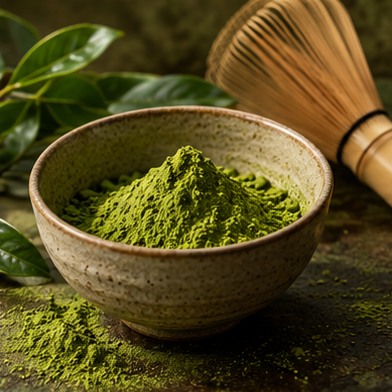
Matcha gives perfumery a recognisable cultural and sensory reference: green powder, a prepared drink, a ceramic bowl and the contrast between grassy bitterness and a soft texture. A perfume may emphasise any of these associations. Some matcha fragrances feel dry and woody; others suggest a sweetened latte. The name alone does not settle the style, and it does not imply that every wearer will experience the same reassuring association with tea.
What a matcha note can communicate
Grassy, leafy, bitter-green, powdery and creamy are useful descriptors, but not a compulsory checklist. A composition might capture the impression of the tea itself or the atmosphere surrounding its preparation. Separating the green effect from the milky or sugary effects is especially helpful. If you enjoy tea but dislike sweet drinks, the distinction matters more than whether a fragrance uses matcha in its name.
Tea accord or extracted material?
Matcha in a note list describes an olfactory idea. It does not by itself identify a tea extract, an extraction method or a concentration of botanical material. Le Labo describes THÉ MATCHA 26 through a matcha accord alongside fig, vetiver, cedar and bitter-orange effects. That is one documented interpretation of the theme, showing how a tea idea can be framed by fruit, texture and woods rather than by sugar alone.
Why tea belongs in the 2026 conversation
Perfumer & Flavorist’s 2026 coverage identifies matcha among rising notes, while The Perfume Society discusses a broader tea direction. These are signals of editorial and market interest, not evidence that every tea fragrance is a recent invention. Tea offers a useful alternative to a simple sweet-versus-fresh divide: it can join greenery, dry texture and warmth without needing to resolve into a conventional dessert impression.
Matcha, milk and wood: three separate impressions
When sampling, ask what makes the perfume seem creamy. Is the tea still easy to identify after that softness appears? Then attend to the foundation: dry woods and roots may make the green opening feel more structured. A milk-like effect can instead give the impression of a drink. Neither combination predicts wear time, projection or an objective mood effect; evaluate the particular fragrance in a wearing context.
Build a more useful comparison
Compare a matcha fragrance with a woody perfume and a lactonic perfume on separate occasions. This helps you distinguish which part of the matcha interpretation attracts you. You may discover that your preference is for green dryness rather than tea realism, or for creamy texture rather than sweetness. Keep those observations when exploring other notes. A preference becomes more useful when it can travel beyond one fashionable label.
Common questions
Does matcha perfume smell like a matcha latte?
Some interpretations do; others emphasise green tea, dry woods or bitter freshness. Look at the full description and sample the actual fragrance.
Is matcha perfume proven to reduce stress?
A tea association may feel comforting to a wearer, but the name and scent description do not establish a therapeutic effect.
Sources and further reading
Trend reports describe their own markets, measures and observation periods; they are not global sales rankings. Product examples describe the named brands’ published interpretations, without affiliation or endorsement.