Its role in a composition
Supports continuity and a polished woody texture. Sandalwood is both a botanical-material category and a familiar olfactory direction. Species, source and grade matter for a natural oil. A sandalwood note alone is not evidence of species, provenance, sustainability certification or a specific natural ingredient.
Origin, grade and interpretation
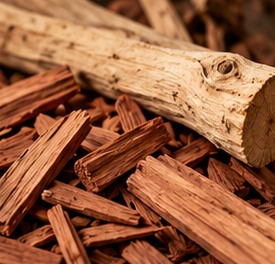
A name such as sandalwood is a useful entry point, but the supplied perfumery material needs a more precise description. Producer documentation identifies the botanical source, extraction process, origin and grade. Those details vary between materials and batches. The image on this page is an editorial illustration, not a certificate of botanical identity or sourcing.
Natural sandalwood materials and sandalwood-like aroma molecules are not interchangeable. Source, traceability and formulation choices matter; a sandalwood note does not identify a botanical species or certify sourcing.
Explore its relationships
Study alongside: Jasmine · orris · vanilla effects. These are olfactory relationships to explore in finished fragrances, not instructions to combine undiluted raw materials. Similar ingredients can support different effects when their proportions and surroundings change.
Compare creamy wood with dry, pencil-like wood; focus on texture before intensity. Compare creamy woods with dry cedar-like woods. Focus on texture: rounded and milky impressions versus pencil-like dryness.
From ingredient to fragrance
The useful question is not only whether you recognise the ingredient. Ask what it changes: does the composition feel brighter, drier, softer or more spacious? A material can be important even when you cannot name it in the finished result.
Technical context: IFF LMR Naturals Compendium · Landema extraction processes.