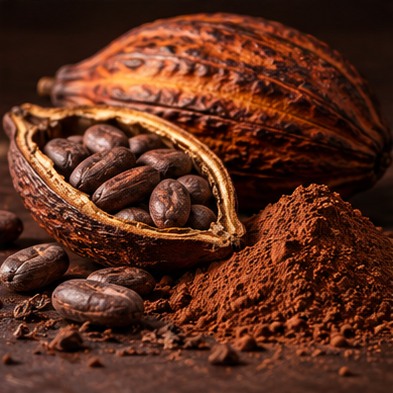
Cacao gives a fragrance more possibilities than the simple promise of chocolate. It can evoke dry cocoa powder, a roasted bean, a bitter edge or a sweet, creamy confection. The distinction matters because the word gourmand can hide very different textures. A perfume that suggests chocolate may feel dense and enveloping, or relatively dry and structured, depending on the surrounding floral, woody and balsamic effects.
Cocoa bitterness and chocolate sweetness are different
Before naming a perfume as a chocolate scent, ask whether the impression is powdery, roasted, sugary or creamy. Dry cocoa powder is a different sensory reference from a filled chocolate or a cup of sweetened cocoa. A fragrance may deliberately blend these associations, but a careful description can keep them separate. That distinction is often more helpful than deciding only whether the scent feels edible.
Cacao materials and a cocoa accord
Natural-source materials and constructed accords are different ways of approaching a cacao idea. A note list does not establish which approach a particular perfume uses. Guerlain explicitly describes the cocoa effect in Fève Gourmande as an accord composed by the perfumer. That is a useful reminder that realism can be created through relationships among materials, rather than requiring a literal food ingredient to account for every impression.
Why contrasts can change the gourmand reading
Guerlain places its cocoa theme alongside rose, rum, spice, patchouli and smoky-tea directions in the product description. The example demonstrates how a familiar edible reference can be framed by floral and dry impressions. These contrasts do not cancel the gourmand character; they can give it a more specific shape. The brand’s note description should still be read as an account of the intended experience, not a complete formulation disclosure.
Its place in current fragrance interest
Spate’s 2026 predicted-trends report includes chocolate among growing fragrance-note interests within its stated observation period. That provides a reason to explore the theme, not a reason to assume that a cacao fragrance is new, better or more suitable for a particular wearer. The enduring attraction of an edible reference and a current rise in attention can coexist without making them the same claim.
How to compare cacao with neighbouring notes
Try a cocoa-themed perfume beside vanilla and a toasted-seed interpretation. Does the darker effect feel bitter or simply roasted? Is the softness coming from a creamy impression or from a powdery one? Then examine the later structure: earthy patchouli and smooth woods can lead to different kinds of depth. Record the comparison on separate labelled blotters and revisit it without forcing every scent into a dessert category.
Common questions
Does cacao perfume always smell like sweet chocolate?
No. It may emphasise dry cocoa, roasted beans, bitterness or a creamier chocolate impression.
Is a cocoa accord the same as cacao extract?
No. An accord is a composed effect; an extract is a particular supplied material. A finished fragrance may use different approaches.
Sources and further reading
Trend reports describe their own markets, measures and observation periods; they are not global sales rankings. Product examples describe the named brands’ published interpretations, without affiliation or endorsement.